The local world of foraging is an interesting place. While we have definitely met other foragers in the Okanagan, it is not a close-knit community by any means. Everyone seems to be doing their own thing by and large, with their own following if they have one. Foraging by itself has been the domain of many peoples around the world for a very long time, concurrent with farming, but predating large supermarkets by literally thousands of years. To this day in many parts of Europe, foraging is still engaged in to augment what is bought at the store. A friend once told me that in the days of the USSR, citizens there would forage under cover of darkness to attempt to boost the meagre rations provided by the state. If caught, a family member could disappear, which had happened to the friend’s father a few times before they finally fled the country.
Here in the Okanagan of BC, Canada however, the idea of foraging is still mostly a foreign concept, and one that seems to be associated with earth worship, paganism, new age beliefs, and even witchcraft. The idea that one can be involved in foraging and NOT be engaged in those belief systems is a mind-blower to some that we’ve met at our booth, not to mention those who feel that the concept of foraging is reserved solely for first nations peoples and no one else.
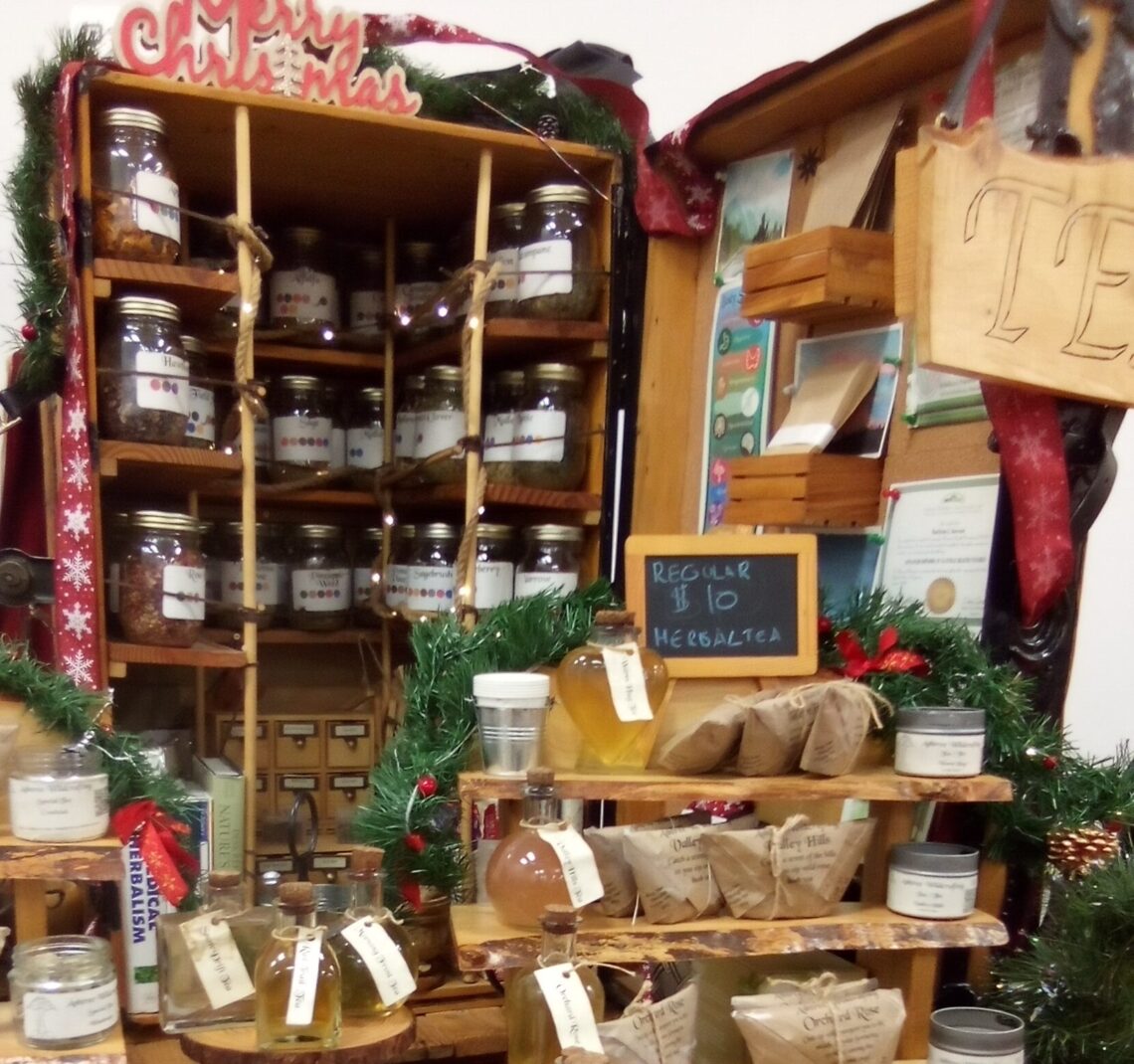
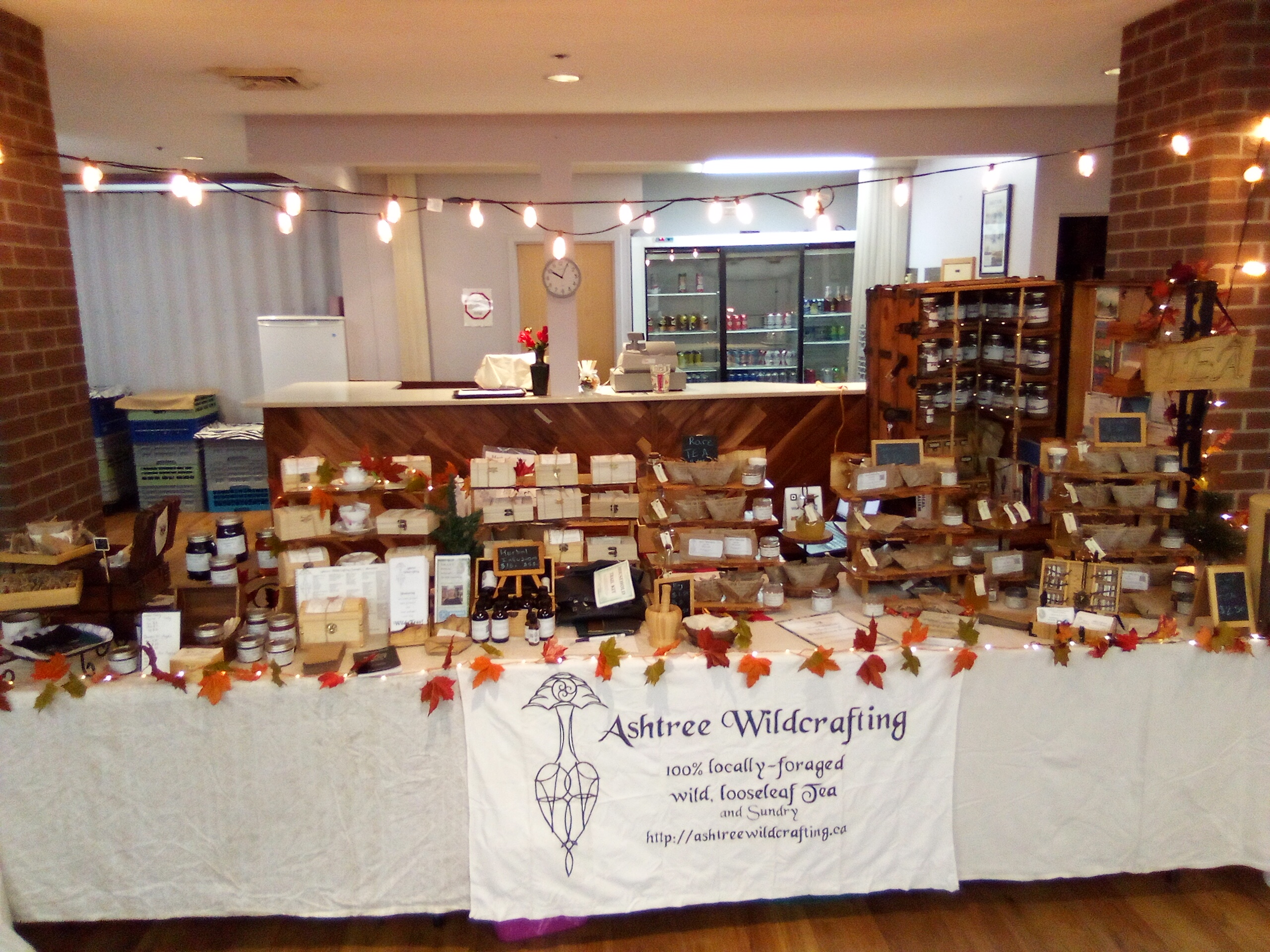 Various people who come to our booth feel that our 1850’s aesthetic is somehow reminiscent of witchcraft and often exclaim how “witchy” our booth looks. A wooden tea sign slowed down these accusations for a time, but they’ve ramped back up again. We’ve found out that people will tell each other about us, describing us as their “witchy tea girls” or that they bought a “witch’s tea” from us, etc. One visitor to our booth actually asked for the “witch’s tea” they’ve been served by some friends, as they wanted to buy it. We looked at each other, then at the guy and began querying what kind of tea he’d had, and thankfully for him, his friends were at the same venue shopping, so he ran off to ask them the name of the tea. It turns out he’d been given a cup of our Warm Hug blend, and after clearing up the misconception around our teas, he left having spent over $70 at our booth!
It’s gotten to the point where an explanation of what we are and are not, needs to be written, and if I had the money, a coffee table-sized book would be available, of photos and old book plates displaying what an apothecary of the 1800’s time period looks like, to attempt to dispel the idea that we are in anyway connected to the dark art practices of witchcraft. One guy thought that because of our aesthetic and the fact we work with herbs, that we must be white witches, because in his mind, that’s all that’s necessary to be a white witch. He even asked if I knew what a white witch was. I know a little more than he does on the subject and that knowledge goes back to my childhood. I’ve met and been acquaintances with various witches over the years, and some love to come to our booth these days to buy teas from us, chat up a storm, laugh, and enjoy our company. They will tell you firsthand that we are not witches, but that they love us anyway.
Herbs used in witchcraft aren’t quite used the same way that herbalists or foragers use them. There may be potions and teas and tinctures and salves for sure, but more often than not, the herbs are a catalyst for what is deemed a spiritual act of bringing healing. We’ve had these people come to our booth asking if we have herbs that open the third eye, no we don’t. We’ve been asked for herbs that help out with smudging, sorry, no we don’t. We’ve been asked if our teas would be good for tea leaf reading and/or scrying. . . no, not that we are aware of and we have no intention of looking into it.
We don’t pick certain herbs under certain signs, on the new moon, full moon, solstice or equinox. We do not observe moon-based ceremonies or solstice/equinox celebrations, nor do we worship gaia or mother earth or mother nature as various groups term the deity. We do not infuse our teas with “energies” or engage with or promote the use of “energetics” in the plants we harvest or the teas we blend. There are no sacred rituals attached to what we do at any point from gathering to selling.
In some ways, I am personally glad that we didn’t start the concept of selling wildcrafted looseleaf teas until after my hair had gone gray, because in my younger years, I’d regularly be told I looked goth, without any makeup as I don’t wear makeup. I like black as an uncomplicated, restful colour that matches everything. Spiders are useful creatures that keep bug populations down, and they can be very social if one chooses to engage with them. I played with garter snakes as a kid and rescued tree frogs from the road many times. I taught my kids to like insects and reptiles too and we have made friends with yellow jackets and paper wasps. But none of this means I was actually embracing anything goth as a statement or point of identification.
If one looks at image searches for witchy apothecary, they will get images featuring candles, skulls, witch’s hats, potion bottles, and potentially dark symbolism to go along with it. Sometimes the imagery is more mundane and more closely resembles the kitchen hutch of a farmhouse with it’s shelves and drawers, plants and cooking implements, etc. I’m not going to display any of that artwork or photography here.
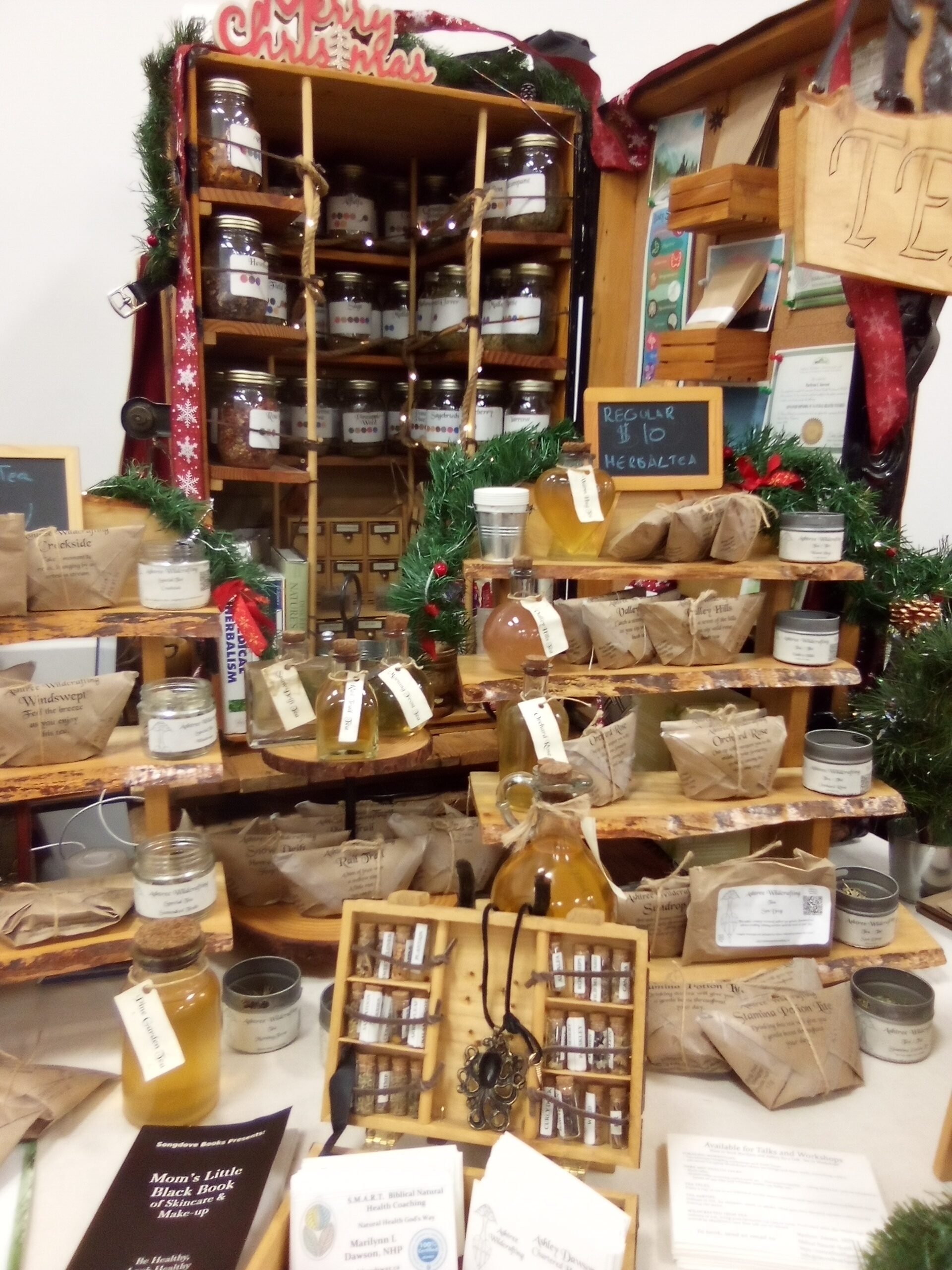 Our aesthetic grew out of the restoration of an 1890’s travel trunk that we turned into a popup apothecary. In 2023, it was designed to hold jars of herb for use in making custom tea blends, and my herbal medicinal textbooks. It would also become home to a number of Ashley’s historical textbooks, and eventually sets of tiny drawers would be added to make serving cups of our tea blends quicker and more streamlined. We cheer when someone comes to our booth and promptly declares it a roving apothecary! THAT is what we are after! Upscaling the booth display with live-edge natural wood risers only increased that aesthetic and it is such a breath of fresh air when others see what we are trying to do.
In lieu of a coffeetable book, allow me to take you on a short tour of what travelling and brick and mortar apothecaries have looked like over the years.
First up, is a chocolatier in France, that began because an apothecary to Queen Antoinette figured out how to hide her medicine in chocolate delicacies. The storefront for that operation is in use to this day. I’ve taken a page from their website, tranlated it into english and pdf’d it with a link back to the page it was pulled from, here. Take a look around the article and at the images present.
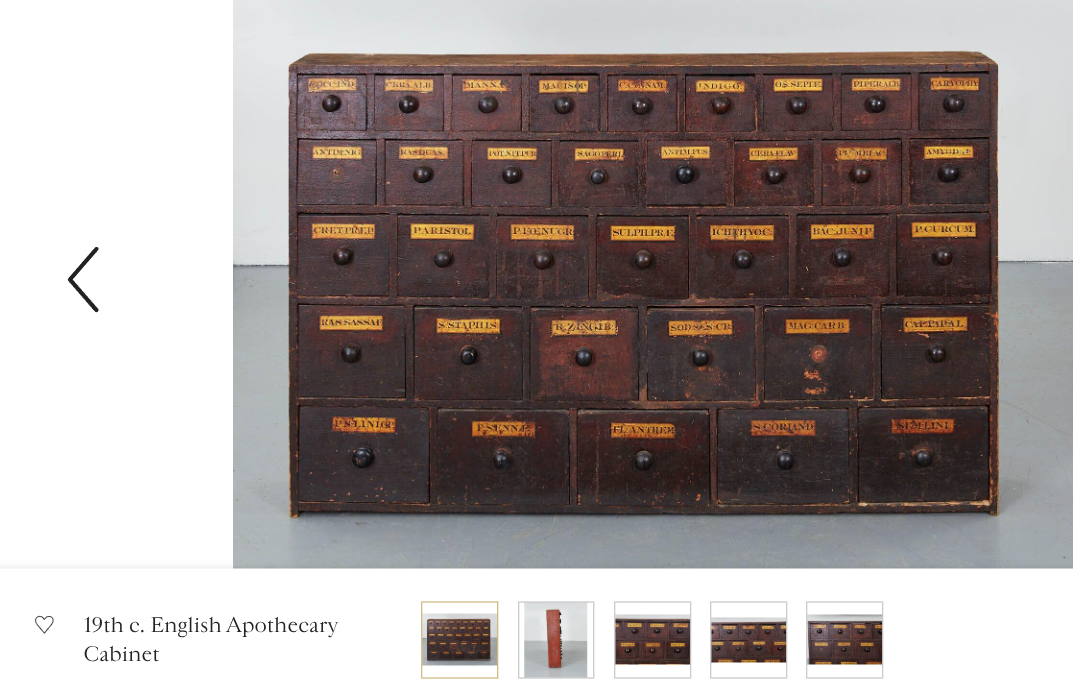
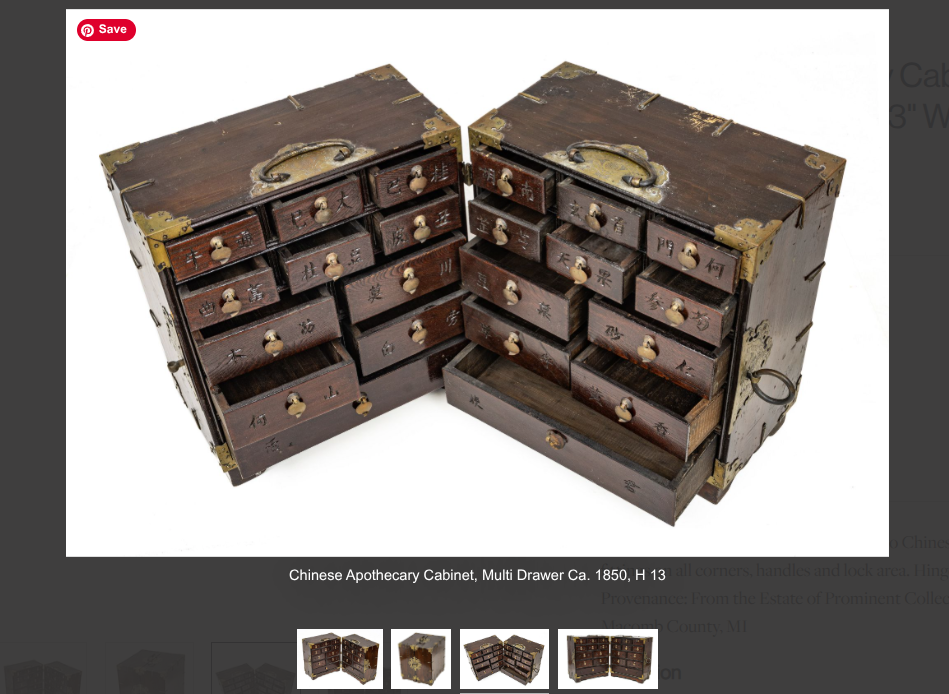
Next up, are two takes on the idea of an apothecary chest, one from England, and the other from China. These were found on auction sites and no doubt variations of them now sit as decorative pieces in people’s homes and museums.
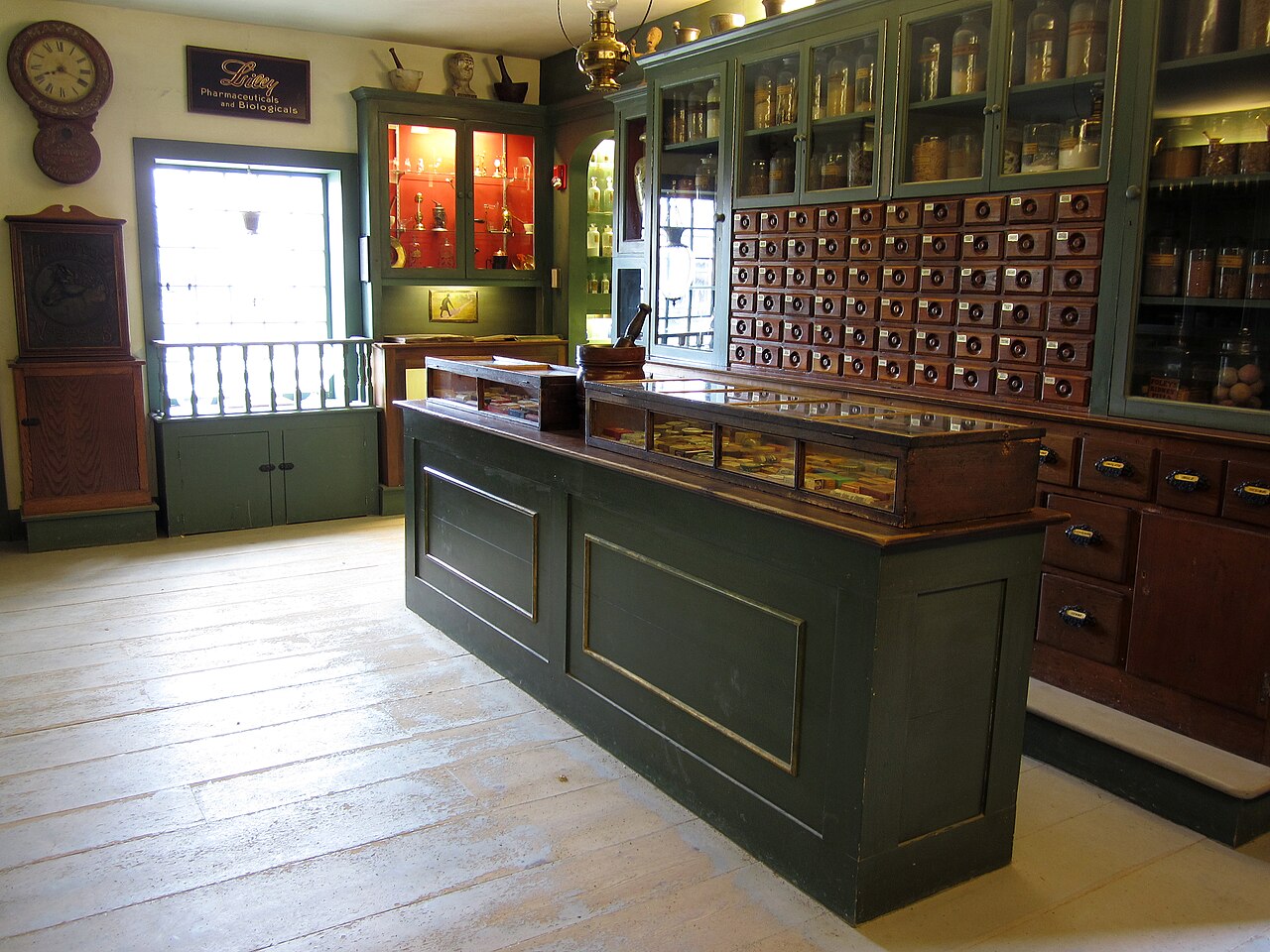
A museum in Vermont faithfully recreated an apothecary to look how it might as if it were still in use.
In 2025, a theme park in England was preparing to auction off an actual apothecary that had sat unused and left as-is since the death of it’s proprietor in 1909! Check out the pdf I pieced together for this one!
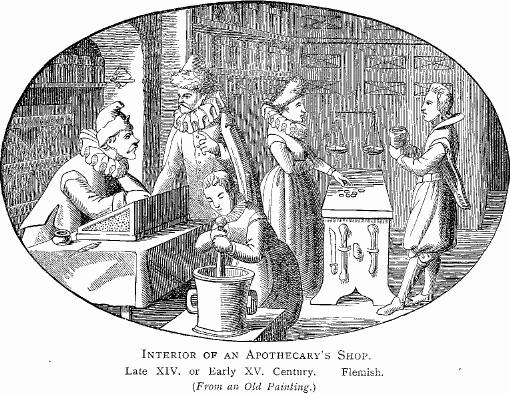
A sketch from a book all about furniture written in the 1800’s featured a plate showing a late 14th century apothecary shop.
The next iteration of our booth, which will happen as time and funds permit, will be taking the concept of baker’s racks, and turning them into folding, mini versions of the floor-to-ceiling apothecary displays seen in the various photos in the above documents. This is enroute to potentially building a “retail trailor” as they call them, that will become a rolling tea parlor where these racks will be attached to the walls. We get asked if we have a storefront, which we don’t as of yet. That requires us to find land we can set up on with a foodsafe kitchen, drying facility, etc, first. Three ducks that aren’t even close to being in a row right now. One iteration at a time.
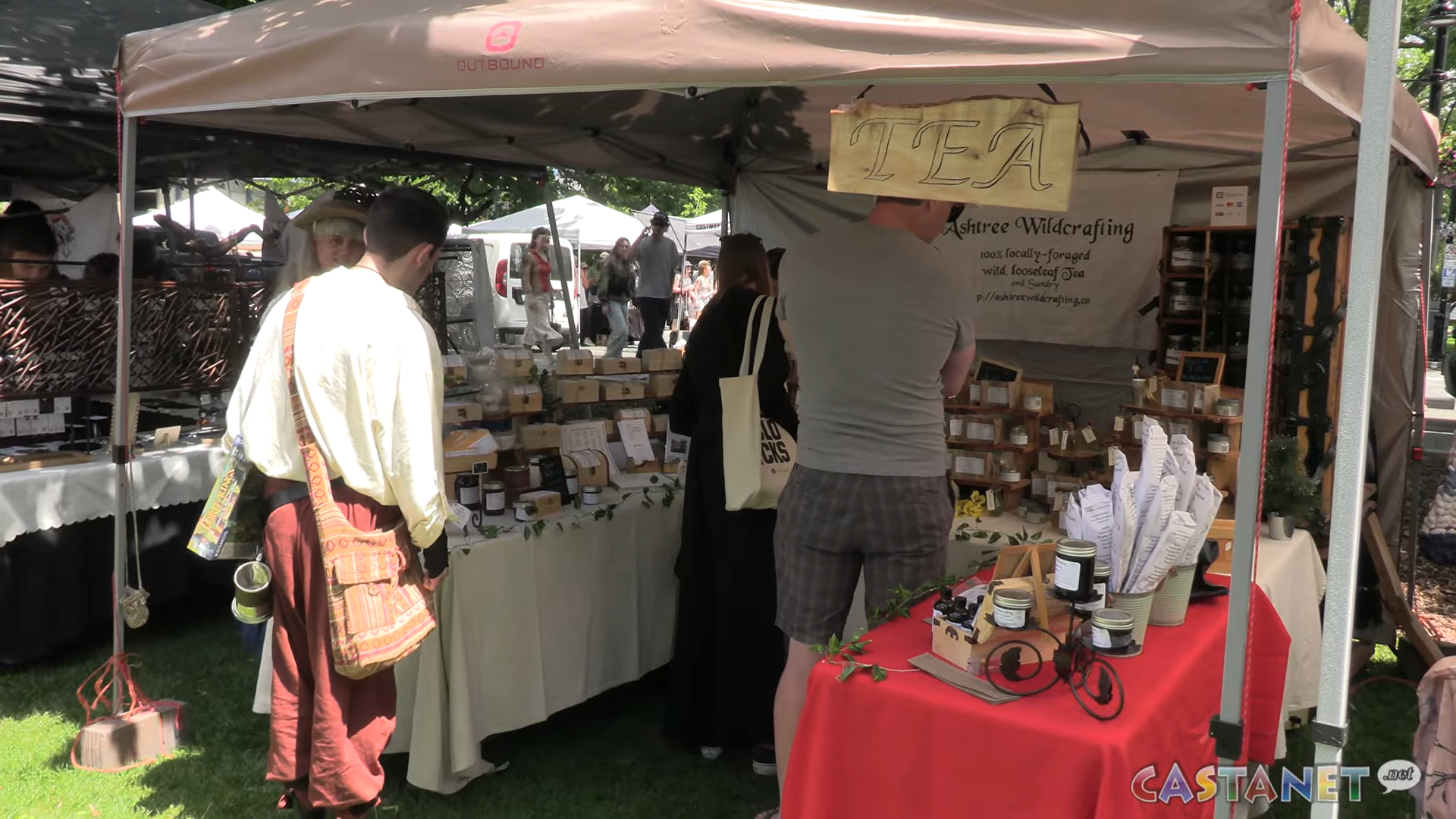 As the years go by, we are learning where our target market is, and one of those locations appears to be ren fairs. We are hoping to be at more ren fairs in the future after attending our first one in May of ’26. Our booth’s aesthetic fits right in at these fairs. We also attend wellness fairs whenever we are made aware of them and whenever we are accepted to them. Currently, the most regular wellness fair we attend is the Vernon Wellness Fair twice a year. Bringing wild herbs to the man on the street is our goal, taking it out of the realm of mystery and into the common kitchen, and discussing the wonderful world of healing that God has placed inside the herbs we’ve researched and offer.
Yes, I just mentioned God. We are both born-again Christians. We worship the God who created the world we live on, who created the plants and animals for our food and sustinance. Over on my coaching blog, I wrote a lenghty piece showcasing in Scripture the various times when God granted His people knowledge around His creation. I include verses in the side bar of the coaching blog that showcase uses of food, herbs and medicine in Scripture as well. Every day, we thank God in various ways, for the abundance He has provided to us where we live here in the Okanagan Valley. Discovering what God has growing around us for our use, and learning what modern research has uncovered about those herbs and their phytochemical makeups, is a lifelong journey we embarked on back in 2015 and now delight in sharing with you anytime you come to our booth.
Welcome to the world of phytotherapeutic herbalism as seen through the eyes of two born-again Christian foragers!


