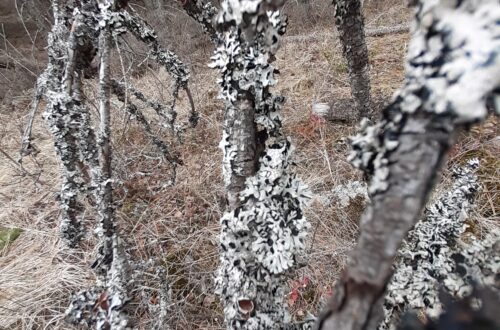
 Foraging in 2026 is off to a roaring start! Our first foraging run of the season was a 2 weeks ago Monday, followed by last week when we held two introductory foraging workshops.

The first was up in Vernon on a public-use area of land where attendees were introduced to pine bark, fir needles, and got to see nettle, fieldmint and other herbs in their seedling stages.
The second introductory foraging workshop took place on Saturday, where only workshop alumni attended, so rather than go through the entire foundational talk again, we simply hit the trail. One of them had requested to learn about the differences between alfalfa and sweet clover before they flower. We chose a trail where both grow, and managed to find specimens growing not far from each other, allowing for side-by-side comparison in real-time, from visual markers, to scent, to flavour. We didn’t take photos of this trail tour.


When that tour wrapped up, we grabbed lunch in town, then headed out for our second major foraging run of the season. But apparently we’re beginning the season firing on all cylinders, because we chose the hardest part of a trail to start the day’s hike.
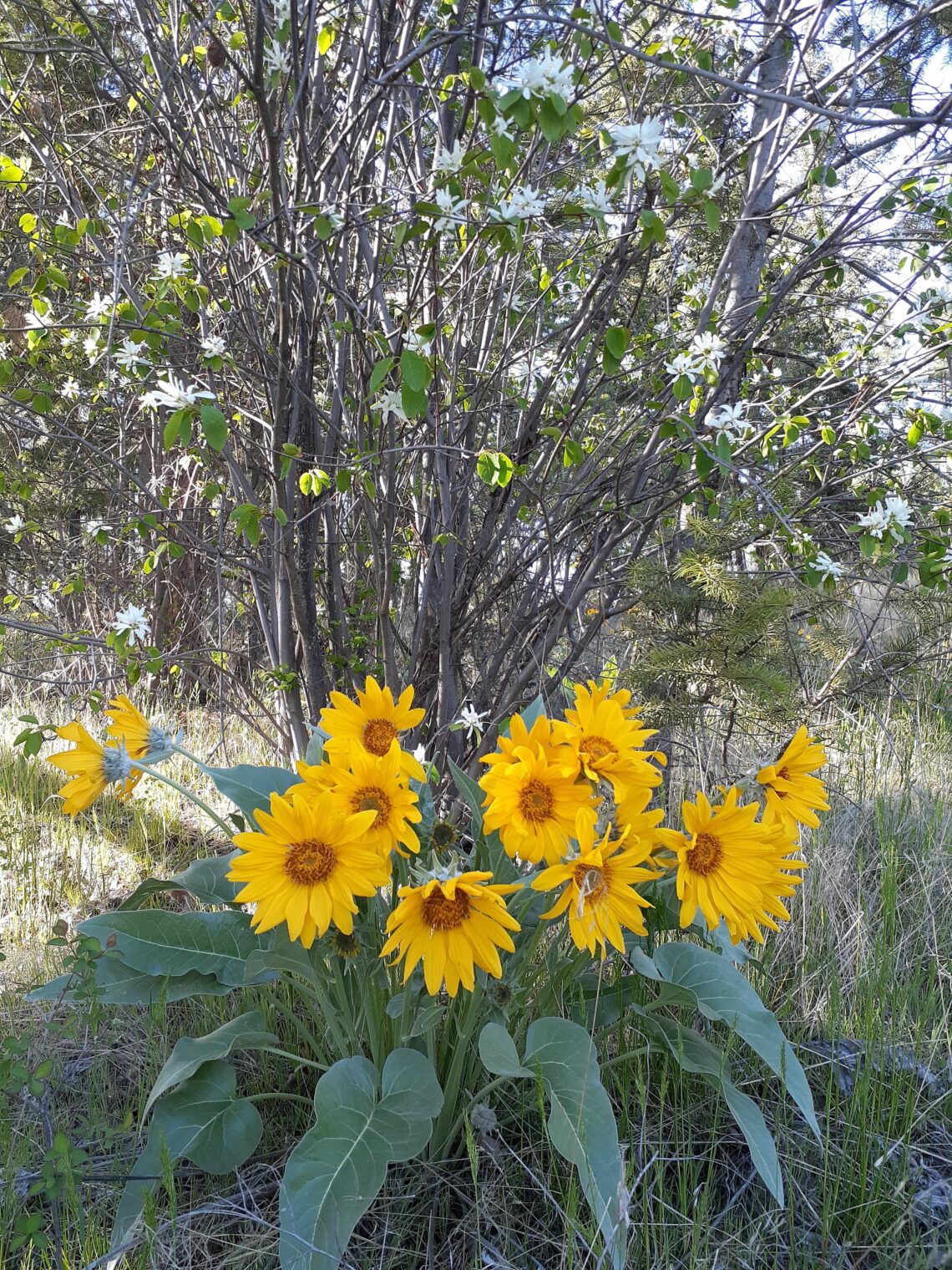
We climbed a 45 degree hill to reach some flowering Arrowleaf Balsamroot, parsley and yarrow.

A beautiful patch of Arnica was nearby, and after gathering some leaves, I looked up and saw more Arrowleaf Balsamroot flowers. Pointing up, Ashley spotted more desert parsley, so off we go again!

Getting up to those flowers took more doing than anticipated, but once we got up there and turned around, you could see Okanagan Lake in the distance!!!
Turning back to the flowers, we found a ponderosa pine tree shedding it’s outer bark so easily, that we filled half a black shopping bag in very little time!

Then it was time to return to the trail we had intended to be on. We spotted a workable path over that wasn’t as steep as what we’d climbed, and carried on our way. Our destination was the zone where we usually get our desert parsley enmass.

This zone also has a healthy amount of yarrow, 3-flowered avens, arrowleaf balsamroot, juniper trees and shrubs, and a lily that is finally leaving the BC conservation watch list: the Chocolate Lilly! This year, we saw innumerable chocolate lily seedlings all over everywhere in this zone! Maybe we’ll get some chocolate lily hips this year. . . they seriously taste much like cucumber. Quite nice, I just haven’t been able to justify picking them while they stayed on the watch list. As foragers, we want the plants we harvest to flourish and return year over year. It was more important for the seeds in those hips to spread, than to hoard their cucumber-tasting casings for ourselves.


We were excited to see the kinnickinnick in flower, and we picked some saskatoon flowers as well. We plan to make saskatoon flower syrup this spring. Thanks to high winds around the time the berries ripen here in the Okanagan, we can’t always gaurantee a berry harvest from the bush, but we can pick flowers. Doing that without harming berry production means choosing which branches to nip from and which to leave so that the bush isn’t stripped. After all, birds and wildlife rely on those berries.

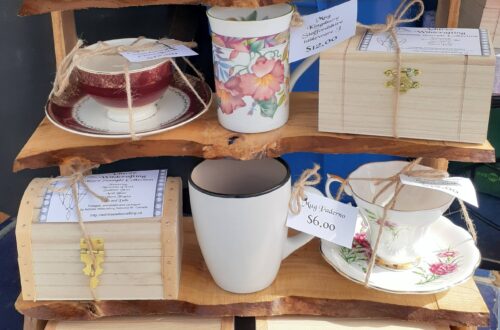
Sunday arrived and we both mildly complained about sore limbs and feet from the week’s adventures. Marilynn set out the K-9 and Kitty Kare Kits on the trunk behind our table, and when we told one visitor about them, she asked if they were selling well. No sales of the kits that day, but they were there to be seen just the same.
Monday dawned, and back out we went.

We went to a portion of the rail trail where foraging has not been banned, and came home with 12 lbs of stinging nettle, a couple pounds of catnip, and two-trays’ worth of cleavers,

This week we need to prep for Maplefest while also prepping for May 2nd at Rustic Reel’s Pets n Pints event. There, Marilynn will have a proper poster for the new Kare Kits, as well as leaflets talking about herbs for you and your animal. Preparing this information is what led to the previous blog article on poorly researched accusations against dandelion and horses. Dandelion has been highly researched and to date, no neurotoxins have been found in the plant. To the contrary, it has been tested to actually be neuroprotective! We’ll see if we have a Kare Kit for horses on May 2nd, or if we’re just talking up the larger Equestrian Trailkit instead. A smaller kit would make sense for strained budgets, so we’ll see what Marilynn comes up with.
CORRECTION: We are looking forward to the next Arrowleaf Balsamroot Glycerine tincture advanced foraging workshop near the beginning of May. This time it will be up in Vernon, and in partnership with Noodlelegs.ca. We have purchased a portable single-burner butane stove so that we have no doubts about ability to boil the water in the double-boiler! Vintage is fun and affordable, until it repeatedly stops working, so the old coleman with its tank that won’t stay primed, has to be retired. The field kitchen needs something more reliable! We picked that up today, and look forward to making a northwestern vanilla flavourant using Arrowleaf Balsamroot flowers on May 8th. Field destination to be decided by Noodlelegs. The deadline to register for this event is May 3rd. Contact noodlelegs to confirm your registration before the 3rd and she’ll let you know how to get your $60 payment to Marilynn by the 3rd.
Our legs are wondering what they did to get beat up, but it took awhile for the plants to reach harvestable growth this year, so we are hitting the ground running. Ah well, toughen up now to take on more challenges later.
Do check the where we’ll be card to see all the various fairs we’ll be at over the month of May. The only two Sundays we won’t be at fairs, we’ll be found at the Rutland Flea Market instead. If you live in the Central or North Okanagan, we hope to see you at one of these fairs. Don’t forget we are open to various bookings this year as well, simply reach out to arrange for the booking you want, and we’ll go from there.